Sri Lanka’s first officially classified ecolodge is relaunching as more than a place to stay. It now aims to be the hospitality gateway to the island’s last great rainforest, built on conservation, community and discovery.
Dawn at the edge of the Sinharaja Forest Reserve starts with birdsong. Mixed-species flocks move through the canopy, endemic birds show up in flashes of colour, and mist lifts off the tea bushes of the Enselwatte Estate. This is where The Rainforest Ecolodge, managed by Aitken Spence Hotels, has started its next chapter.
The relaunch puts the Sinharaja, its biodiversity and the communities who live beside it at the centre of the guest experience. It is aimed at travellers who want more than a room near nature. They want to enter the forest with curiosity, understand what they see, and leave with a stronger connection to the natural world.
The Sinharaja is a UNESCO World Heritage Site and a Man and the Biosphere Reserve. It is Sri Lanka’s last viable area of primary tropical rainforest, home to an exceptional concentration of endemic plants, birds, mammals, reptiles, amphibians and invertebrates. The lodge sits where dense rainforest meets cultivated tea land. That makes it an ecological transition zone where naturalists, photographers and citizen scientists can watch wildlife move between habitats.
“The Rainforest Ecolodge gives us an opportunity to bring people closer to one of Sri Lanka’s most remarkable natural treasures, while ensuring that conservation and local communities remain an integral part of that experience,” said Stasshani Jayawardena, Chairperson, Aitken Spence Hotel Holdings PLC. “This is very much in keeping with how we see the future of tourism: thoughtful, responsible, and deeply connected to place.”
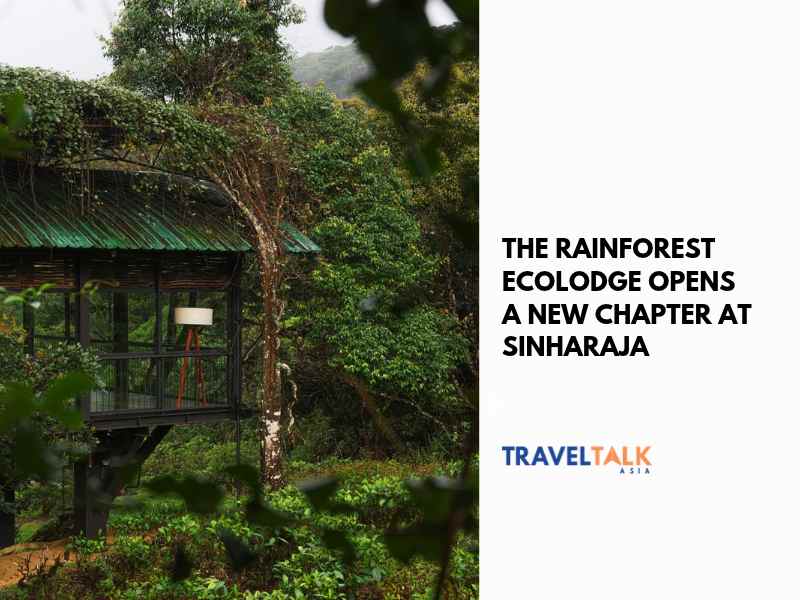
The property was designed around responsible tourism from the start, and it holds LEED® Platinum certification from the US Green Building Council. Its 20 chalets are made from repurposed shipping containers and other recycled materials. Each has a private deck, modern amenities and immersive views, so guests stay comfortable without being cut off from the landscape.
That approach has been recognised. In 2026 the lodge was named Silver Winner in the ‘Nature Positive’ category at the ICRT Indian Subcontinent Awards and Sri Lanka’s Leading Lodge at the World Travel Awards.
Guided birdwatching walks start at first light. Daytime trails explain the rainforest’s layered structure, its medicinal plants and its wildlife. Waterfall treks follow forest paths to clear streams and natural pools. After dark, night walks show a different world of frog calls, moths, geckos and bats.
“We want the ecolodge to be more than just a place to stay,” said Susith Jayawickrama, Managing Director, Aitken Spence Hotel Holdings PLC. “We want it to become a meaningful gateway to understanding one of Sri Lanka’s most vital and vibrant ecosystems.”
Two new resources are in development: a Nature Interpretation Centre and an Online Knowledge Hub. They will bring together species profiles, field notes, publications, audiovisual material and conservation insights for travellers, students and nature enthusiasts to use before, during and after their stay. Planned partnerships with universities, conservation groups, naturalists, wildlife photographers, artists and wellness practitioners will support citizen science, acoustic monitoring and conservation storytelling. They will also give experts a platform to share their findings more widely.
Community is central to the model. The guest experience draws on local employment, naturalist-led excursions, rural food traditions and village livelihoods. Guests can learn about kithul tapping, traditional medicinal plant knowledge and tea cultivation. The rainforest’s story cannot be separated from the people who have lived and worked beside it for generations.
The goal goes beyond reducing impact. It is a regenerative model of tourism that contributes to the long-term ecological and social health of the region.
The lodge suits seasoned birders, wildlife photographers and artists, as well as first-time visitors curious about biodiversity. It also works for travellers who simply want quiet, fresh air and a sense of place. Here, adventure is guided by knowledge, hospitality is shaped by responsibility, and every journey into the forest starts with the same invitation: come and look closer.