An exclusive Symposium on Sustainable Tourism was successfully held on 25 January 2026 at Amba Yaalu – Kandalama, Sri Lanka’s first 100% women-led hotel, operated by Thema Collection. The symposium brought together industry leaders, policymakers, and sustainability practitioners to discuss innovative and practical pathways to embed sustainability across the tourism value chain.
The discussions explored key topics including low-impact destination planning, plastic-free tourism models, climate-responsive design, biodiversity-positive operations, and community-led and inclusive tourism initiatives, positioning tourism as a powerful driver of sustainable development. Demonstrating its commitment to responsible action, the greenhouse gas emissions of the event were quantified and independently verified by Control Union Environmental Services, and the symposium achieved carbon neutrality through the offsetting of its verified emissions.
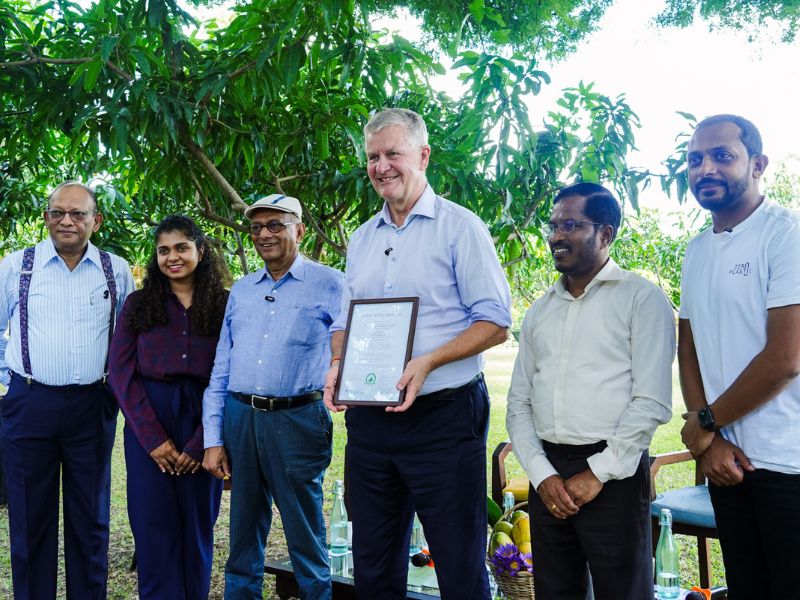
The symposium was graced by Mr. Erik Solheim, an internationally respected statesman, environmentalist, and development thinker whose work has shaped global dialogue on sustainability, climate action, and inclusive growth. Addressing the audience, Mr. Solheim emphasized the transformative role of tourism, stating:
“Tourism is one of the world’s largest job creators, providing vital opportunities for local communities. While global tourism has now returned to pre-COVID levels, there is significant room for improvement especially in advancing low-impact and responsible travel.”
Mr. Solheim also commended Thema Collection for its leadership in inclusive tourism, particularly highlighting Amba Yaalu – Kandalama as a pioneering example of women-led hospitality in Sri Lanka. He expressed appreciation for hosting the symposium at a property that embodies sustainability and social empowerment in practice.
Joining the discussion, Mr. Chandra Wickramasinghe, Chairman and Managing Director of Thema Collection, reflected on the importance of bold decision-making in shaping Sri Lanka’s tourism landscape. Drawing from experience, he noted:
“Taking risks is essential to move the industry forward. Maalu Maalu was initiated just after the war as the first resort on the Eastern Coast, supporting the revival of tourism and economic reconciliation between the North, East, and the rest of Sri Lanka. Today, terrorism against the environment must stop—otherwise, the industry itself will face serious challenges in the future.”
Dr. Samantha Pathirathna, Chairman of ECO Treats Tourism (Pvt) Ltd and Sustainable Tourism Consultant to the Asian Development Bank, highlighted the importance of landscape-level investments in driving climate resilience. He emphasized that when landscape investments are integrated with climate-responsive projects, they deliver long-term environmental protection while strengthening livelihoods and destination sustainability.
Adding a strong advocacy perspective, Mr. Nishshanka De Silva, Founder of the Zero Plastic Movement, drew attention to Sri Lanka’s escalating plastic crisis. He stated:
“Sri Lanka uses nearly 20 million shopping bags, 10 million PET bottles, and 15 million lunch sheets every day. Yet, only about 3% of the plastic we import is recycled. Addressing plastic pollution must become a core priority for tourism and beyond.”
Further contributing to the discussion, Ms. Nimesha Palliyaguru, Sector Coordinator – Tourism at the Market Development Facility (MDF), stressed the importance of data-driven decision-making in advancing sustainable tourism. She highlighted the need for systematic data collection and monitoring to measure impacts, guide investments, and ensure accountability across the tourism value chain.
The symposium reaffirmed Sri Lanka’s potential to position itself as a sustainability-led tourism destination, where environmental stewardship, community empowerment, and economic resilience are central to the future of the industry