Strengthening alternate airports becomes critical as Sri Lanka targets 3 million tourists by 2026
Dinushka Chandrasena
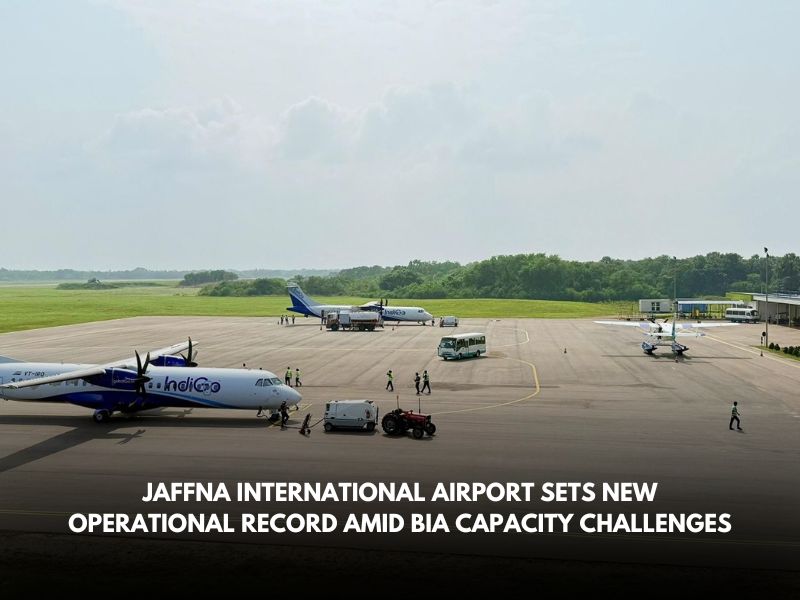
Jaffna International Airport (JIA) recorded a significant operational achievement today, handling the highest number of aircraft movements in a single day since its international reopening. The airport successfully accommodated two international IndiGo flights alongside five domestic commercial flights operated by Cinnamon Air and DP Aviation, reflecting growing confidence in Jaffna as a viable air gateway to the Northern Province.
All seven aircraft movements were efficiently managed by the Airports Authority of Sri Lanka (AASL) ground handling team at Jaffna International Airport, highlighting the airport’s improving operational readiness and the capability of its on-ground infrastructure and personnel.
This milestone comes at a critical juncture for Sri Lanka’s aviation and tourism sectors. Bandaranaike International Airport (BIA), the country’s primary gateway, is currently operating at or near capacity, underscoring the urgent need for Sri Lanka Tourism and the Ministry of Civil Aviation to work in closer alignment to fast-track the development of alternative regional airports. Airports such as Jaffna, alongside others across the island, are increasingly seen as essential to supporting the country’s tourism growth ambitions.
Sri Lanka has set an aspirational target of welcoming three million tourist arrivals by the end of 2026. Achieving this goal will require not only strong destination marketing but also adequate aviation infrastructure to manage rising passenger volumes, enhance regional connectivity, and reduce overreliance on a single international hub.
According to the Minister of Tourism, ground-breaking and construction work for the long-awaited new terminal at Bandaranaike International Airport is expected to commence in the first quarter of the year. However, the completion timeline is projected to span several years, reinforcing the importance of operationalising and upgrading alternate airports in the interim.
The increasing utilisation of Jaffna International Airport—both for international and domestic services—signals its potential role in supporting tourism dispersal, promoting regional economic development, and improving access to lesser-explored destinations in the north of Sri Lanka.
Industry stakeholders note that sustained collaboration between tourism planners, aviation authorities, and airport operators will be critical in unlocking this potential and ensuring that Sri Lanka’s infrastructure keeps pace with its tourism ambitions.
As Sri Lanka charts its post-recovery growth trajectory, milestones such as today’s operations at Jaffna International Airport serve as timely reminders that strategic, island-wide aviation development will be central to the country’s long-term tourism success.